


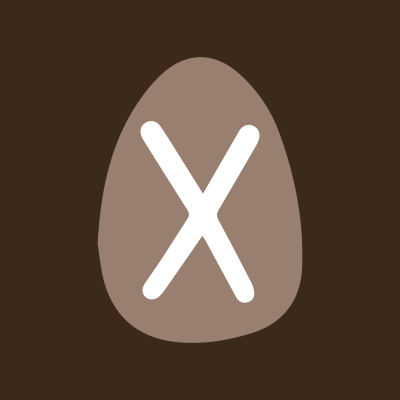
Gebo
Gebo is the rune of the gift — not merely material generosity but the sacred principle of exchange that binds individuals, communities, and even gods together. Its shape, the X, is the mark of intersection: two paths crossing, two forces meeting in the act of giving and receiving. Those born under Gebo carry within them a profound understanding of the relational nature of existence. They know instinctively that nothing in life is truly owned or held alone — that all we have comes through others and returns to others, and that the giving of gifts, in the widest possible sense, is the invisible architecture of all human bonds.
- Dates
- September 28 – October 13
- Element
- Air
- Ruling Planet
- Venus
- Quality
- Harmonious
- Strengths
- Generous · Balanced · Diplomatic · Loving · Reciprocal
- Weaknesses
- Over-giving · Conflict-averse · Indecisive · Self-neglecting · People-pleasing
Personality
Gebo people are the natural weavers of relationship in any group they inhabit. They have an extraordinary sensitivity to the emotional weather of social situations — who needs encouragement, who is being overlooked, where a word of kindness would transform a dynamic. They give freely and graciously, not as a performance of generosity but because giving feels as natural to them as breathing. Their deepest challenge is the shadow side of the gift: the tendency to give without receiving, to sacrifice their own needs so consistently that they lose touch with what they actually want. Gebo's rune shape — an X — is a perfect symbol of balance: two lines of equal weight, each supporting the other. When a Gebo person gives endlessly without allowing themselves to receive, the cross becomes lopsided and the inner equilibrium collapses. Learning to receive gracefully, to ask for what they need, to honour their own desires as valid — this is the core spiritual work of the Gebo soul.
Love & Relationships
Gebo is perhaps the most naturally suited rune for love and partnership of all twenty-four. In relationship, Gebo people are devoted, attentive, and extraordinarily thoughtful. They remember what matters to their partner, anticipate needs before they are spoken, and make love feel like a continuous act of generous attention. The paradox is that this gift-nature can undermine the very partnerships Gebo cherishes. When Gebo gives without receiving — when they consistently prioritise their partner's needs over their own — they create an unconscious imbalance that eventually destabilises the relationship. True partnership is a gift-exchange: both parties offering and both receiving with equal grace. The Gebo person must learn to be as receptive as they are generous, to receive love without deflecting it, to name their needs without shame. When this balance is achieved, Gebo relationships become extraordinary: deep, mutual, rich in reciprocal appreciation.
Work & Career
In professional life, Gebo finds its greatest satisfaction in roles that are fundamentally about exchange, facilitation, and the cultivation of relationship. They excel as diplomats, mediators, counsellors, therapists, social workers, HR professionals, event coordinators, and any role where building bridges between people is the core function. Gebo people have a gift for negotiation that goes beyond strategy — they genuinely want all parties to leave the table satisfied, and this authentic intention makes them extraordinarily effective. Their weakness is the tendency to avoid necessary conflict, to smooth over difficulties that need to be confronted directly. When Gebo learns that honesty in service of genuine relationship is itself a form of generosity — that the most loving thing is sometimes the hard truth — their professional effectiveness becomes formidable.
Health & Wellbeing
Gebo rules the kidneys and the body's systems of balance and equilibrium — the organs that maintain the careful regulation of fluid and mineral exchange within the body. Gebo people are vulnerable to health issues that arise from accumulated imbalance: chronic stress from over-giving, adrenal fatigue from perpetual peacekeeping, and conditions related to the kidneys and lower back that arise when the burden of others' needs becomes literally embodied. The runic tradition also connected Gebo to the health of partnerships specifically — the body's wellbeing being directly affected by the quality of one's closest bonds. Gebo people benefit enormously from relationships that genuinely nourish them, and suffer physically when in dynamics of one-sided giving. Regular practices of self-care — not as indulgence but as the replenishment necessary for sustained giving — are essential for Gebo health.
Mythology & Symbolism
In Norse mythology and culture, the gift was not a casual transaction but a sacred and binding act. The giving of gifts created and maintained the web of obligation and honour that held Norse society together — between kings and thanes, between gods and worshippers, between allies and between the living and the dead. The concept of the gift-sacrifice (blót) lay at the heart of Norse religious practice: one gave to the gods in the expectation of reciprocal blessing, and this reciprocity was itself considered sacred. Odin is the great gift-giver of the Norse pantheon — he sacrificed his eye to Mimir's well for wisdom (a gift exchanged for a gift), and hung nine days on Yggdrasil to give the runes to humanity. The Gebo rune encodes this understanding: that the greatest gifts require the greatest sacrifice, and that the act of giving is always an act of relationship, binding giver and receiver in a sacred exchange that reverberates through time.
This Sign in Other Cultures
The sacred economy of gift-giving appears universally. The anthropologist Marcel Mauss, in his landmark work "The Gift," identified gift exchange as one of the foundational structures of human social organisation across all cultures — not altruism but a system of reciprocal obligation that creates community. In Pacific Island cultures, the concept of mana flows through acts of generous giving; the chief who gives most freely holds the most spiritual power. In Hindu tradition, the concept of dana (charitable giving) is one of the primary spiritual disciplines, understood as a practice that dissolves the ego's illusion of separation. In Japanese culture, the elaborate protocol of gift-giving (omiyage, ochugen, oseibo) is a living social art form that maintains the invisible threads of relationship across time. The X-shaped rune Gebo finds its twin in every culture's understanding that relationship is the fundamental gift.
Compatibility
Best with
Fehu, Wunjo
Challenging with
Nauthiz, Isa