


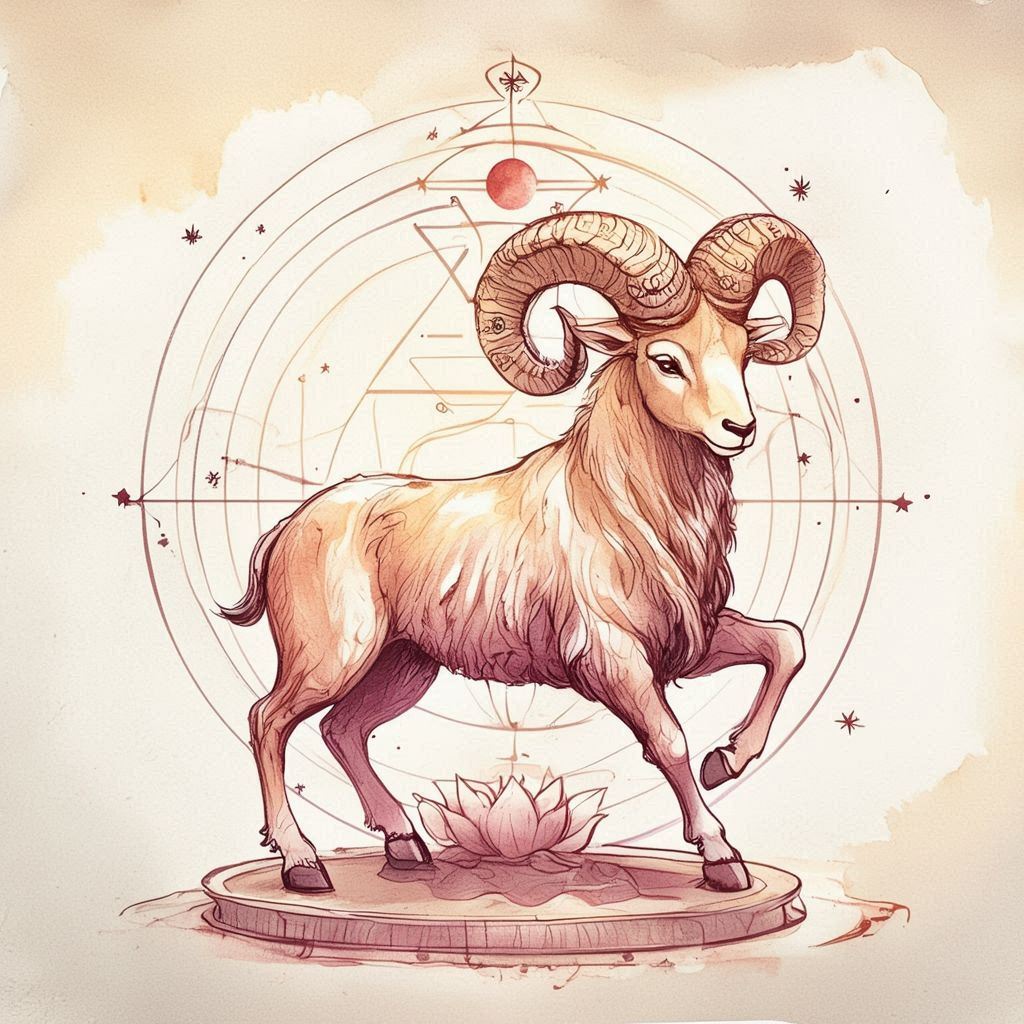
Mesha
Mesha is the first rashi of Jyotish — the sacred science of light that India has refined over more than three thousand years. Like all first signs, Mesha carries the quality of pure beginning: undivided energy pressing forward into existence. Ruled by Mangala (Mars), the planet of vitality, courage, and directed will, Mesha natives are born with a fire that does not ask permission. The Vedic tradition sees this sign as the seat of dharmic courage — not recklessness, but the willingness to act when action is required.
- Dates
- April 14 – May 14 (sidereal). Note: Vedic astrology uses the sidereal zodiac — dates differ from Western tropical signs by approximately 23 days.
- Element
- Fire
- Ruling Planet
- Mars (Mangala)
- Quality
- Chara (Movable)
- Strengths
- Courageous · Pioneering · Energetic · Confident · Decisive
- Weaknesses
- Impulsive · Impatient · Aggressive · Self-centred · Reckless
Personality
The Mesha personality is built around the principle of direct action. These individuals do not accumulate — they release. Where other signs weigh and consider, Mesha has already moved. This quality gives them an extraordinary capacity to initiate: new projects, new relationships, new directions. The Vedic concept of tejas — inner radiance, vital heat — describes the Mesha essence well. There is a quality of brightness here that can illuminate a room and inspire others to move. The shadow is the same: when misdirected, this fire scorches rather than warms. Mangala governs blood, muscles, and the fighting spirit — Mesha natives need to move their bodies and learn to pause before speaking in anger.
Love & Relationships
In love, Mesha is direct and passionate — there is no ambiguity about attraction and no patience for prolonged courtship. The Mangala energy burns brightly in relationship, bringing intensity, protectiveness, and genuine warmth. But the same fire that makes Mesha so alive in the early stages of love can generate volatility later. Mesha needs a partner who can match its energy without becoming a competitor — someone secure enough not to feel threatened by Mesha's independence, and honest enough to speak plainly when conflict arises. The Vedic tradition notes that Mars's influence on the seventh house can create challenges in marriage if the fire is not consciously channelled.
Work & Career
Mesha thrives in environments that reward initiative and speed. The Mangala influence gives these individuals an instinct for leadership — they do not wait to be promoted; they take the lead and trust that results will justify the action. Military strategy, surgery, engineering, athletics, law enforcement, and entrepreneurship all draw on the Mars-ruled qualities of decisive action and physical courage. In Vedic career analysis, a strong Mars in the tenth house amplifies executive ability and willingness to take professional risks. The shadow is impatience with process and a tendency to start projects that remain unfinished when the next challenge appears.
Health & Wellbeing
Jyotish associates Mesha with the head, brain, and face — the parts of the body that literally lead. Mesha natives are prone to headaches, fevers, and inflammatory conditions, all of which reflect an excess of the Agni (fire) principle. The Mangala influence on the body produces strong physical constitution and rapid recovery from illness, but also a tendency to push through pain signals rather than rest. In Ayurvedic terms, Mesha types often run Pitta-dominant: hot, sharp, intense. When this excess accumulates — through aggression, overexertion, or competitive drive — it manifests as skin conditions, eye problems, or acid-related digestive issues. The prescription: cooling foods, disciplined rest, and physical activity that channels Mars energy productively.
Mythology & Symbolism
In the Vedic tradition, Mesha is governed by Mangala, who in Hindu mythology is the son of Bhumi (Earth) and Shiva, born from the cosmic sweat of the Earth when Shiva performed his destructive dance. Mangala is associated with warfare, martial discipline, and the red soil of the agricultural earth. The planet Mars rules Tuesday (Mangalavara in Sanskrit), and offerings to Mangala traditionally include red flowers, red coral, and the recitation of the Mangala Stotra. The first rashi begins at the vernal equinox in the sidereal system, marking the cosmic New Year in many South Asian traditions — a time of new dharmic purpose and renewed action.
This Sign in Other Cultures
The ram symbol of Mesha appears across multiple ancient cultures. In Mesopotamia, the ram was associated with Ea, the god of wisdom and water. In Egyptian astrology, the equivalent position corresponds to Khnum, the ram-headed creator god who fashions souls on his potter's wheel. In Western tropical astrology, Aries covers roughly March 21 – April 19 — about 23 days earlier than Mesha due to the precession of equinoxes that the sidereal Vedic system accounts for. Chinese astrology has no direct rashi equivalent, but the Mesha period broadly overlaps with the Dragon month in late spring, the most auspicious animal in the Chinese cycle.
Compatibility
Best with
Simha, Dhanu, Mithuna
Challenging with
Tula, Makara