


Thai Zodiac
Twelve signs blending Indian and Chinese influences
The Signs

History & Origins
The Thai year-animals are the Chinese twelve-year cycle, made Thai. Quaritch Wales, who studied the Thai treatises of divination, writes that the cycle was introduced to the first Thai kingdom, Sukhothai, in the thirteenth century, at a time of much intercourse with China, and that, counted on a lunar calendar, it has remained continually in popular use. Siam, he notes, looks like a very Indianized country in its court culture and its Buddhist religion; but at the popular level, and above all in divination, Chinese influence is much in evidence, so long naturalized that it has taken on a distinctly local character.
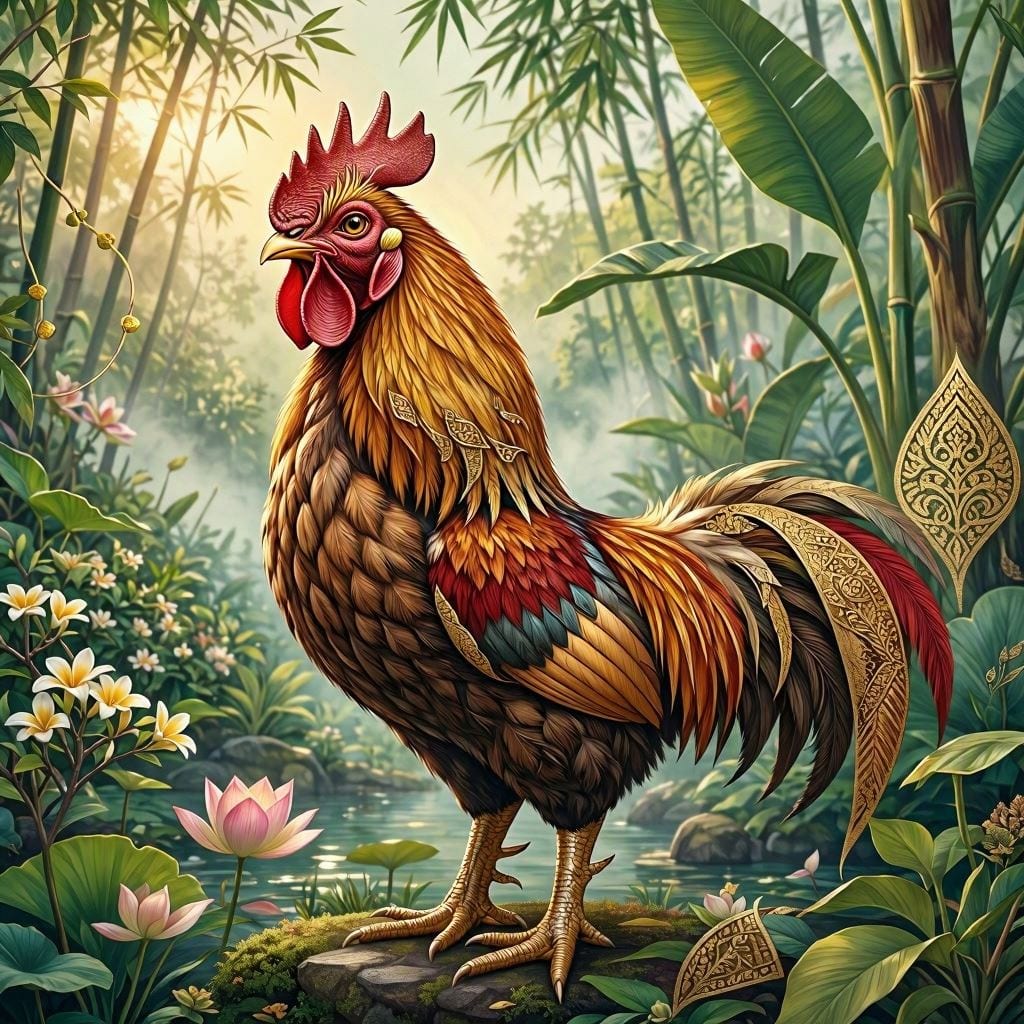
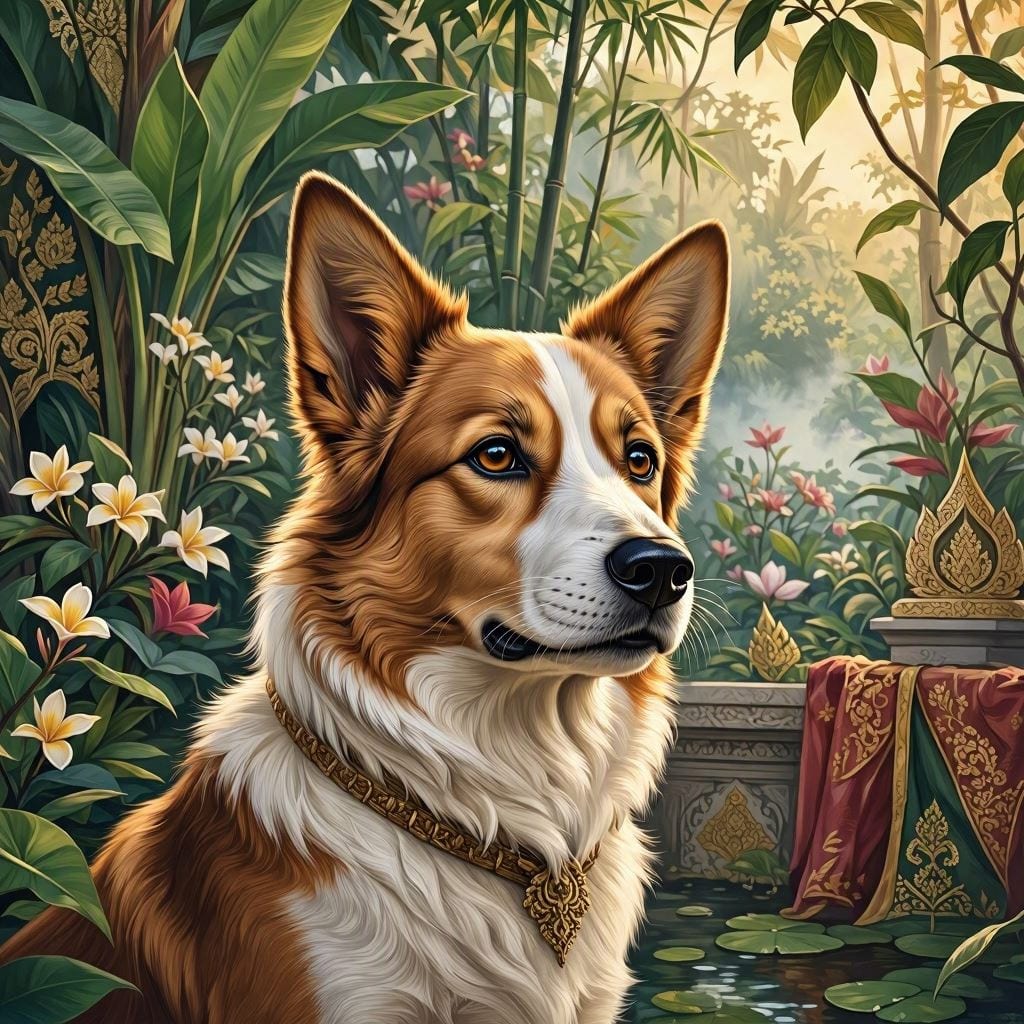
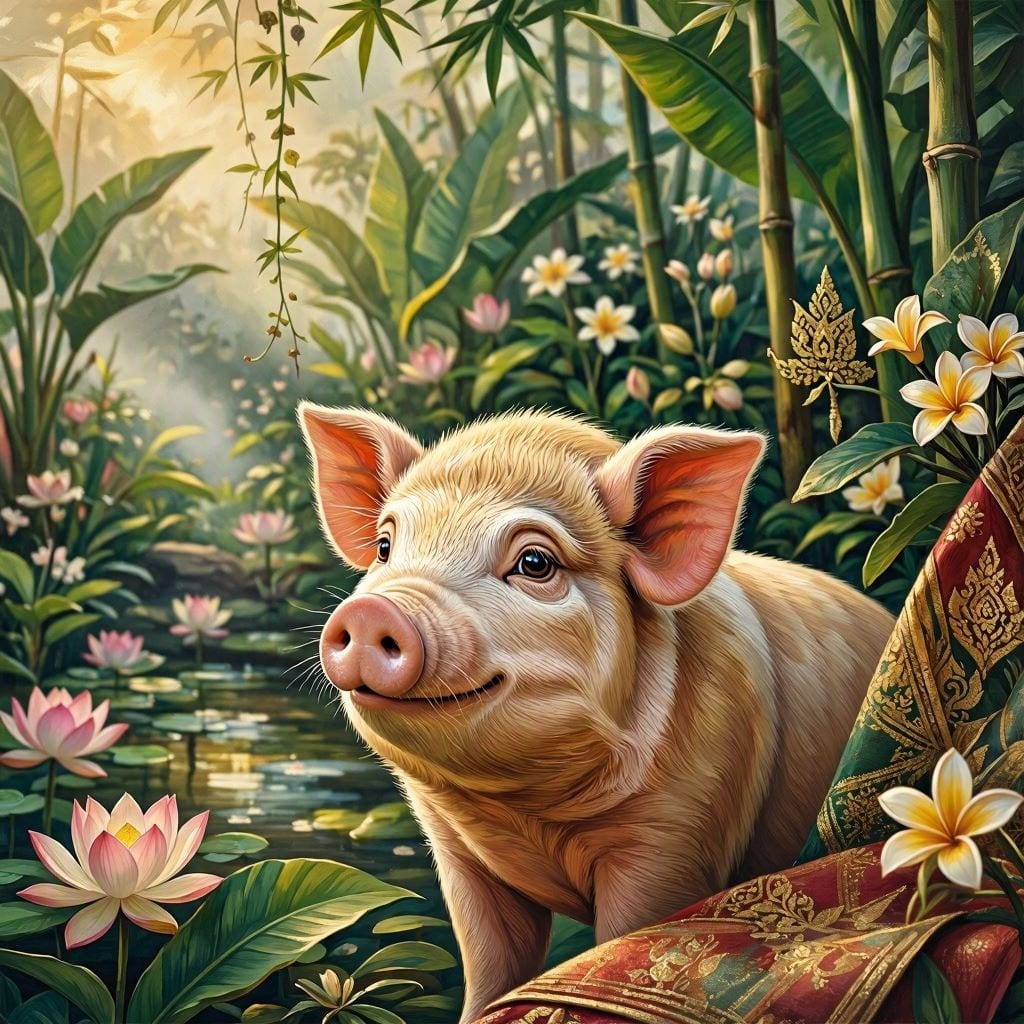
The years have names of their own, distinct from the words for their animals, and the sources explain them in different ways. Quaritch Wales writes that the names are not local but appear to be derived from an early south Chinese dialect; the Royal Institute Dictionary, the official dictionary of the Thai language, marks Chuat, Chalu and Khan as words of Khmer origin. The dictionary defines each name as a year of the cycle that has an animal as its sign: Chuat the rat, Chalu the ox, Khan the tiger, Tho the hare, Marong the large snake, Maseng the small snake, Mamia the horse, Mamae the goat, Wok the monkey, Raka the fowl, Cho the dog, Kun the pig. The fifth year is thus a large snake and the sixth a small one; J. C. Eade translates Marong as “dragon”, and Quaritch Wales gives “dragon” as another reading.
In Thailand the Chinese way of calculating fate took on Indian and Buddhist dress. In the Thai treatises each year is headed by a being riding its animal, a devatā, a man, a woman or a demon, beside a tree in which the khwan, the spirit of the year, resides; and every year is tied to a famous moment of one of the Jātakas, the stories of the Buddha’s former lives, which made a Chinese system acceptable to Thai Buddhists. The week, unknown to the Chinese calculation, came from India: its days bear the names of the planets.
Thailand has named its years in more than one way. Sukhothai, Ayutthaya and Bangkok, the kingdoms of the centre, joined the animal to the place of the year in a decade, “nth of the decade”. Outside the central region another system was in very common use: a cycle of sixty years that combines a series of ten words with a series of twelve, thought to derive from south China; the Northern Thai often distinguish the animal names as the “Khmer” or “Khom” style from the “Tai” style of the cycle. Eade warns that the two are not equivalent: to turn a Northern year into “a year of the dog, last of the decade” without comment is misleading.
When does the animal change? For the Thai state the answer is fixed. The civil registry follows the Royal Calendar, in which the animal changes on the first day of the waxing moon of the first month, between November and December: a child born on 28 November 2019 was registered as a Rat, not a Pig. The year of the era turns at another time: in the Royal Calendar, Loy Chunpongtong notes, the last day of the animal year, at the end of the twelfth month, and the last day of the era year, at the end of the fourth, fall four lunar months apart. The older practice is debated. Cœdès held that the animal changed on the first day of Caitra, the fifth month; Eade knows of no certain evidence for it and cites an inscription of 1777 that points the other way, though he also quotes a chronicle passage that may fit, and concludes that clearer evidence is needed. The Royal Calendar is still computed today: Loy Chunpongtong, whose table of the official years underlies our calculator up to 2007, signs as adviser on its calculation to the Bureau of the Royal Household. ZodiAtlas follows the official rule, because it is the one the Thai registry applies.
The cycle is still alive. In Bangkok Quaritch Wales bought the Brahmajati, a printed collection of many old treatises of divination published in three parts between 1926 and 1931; its second part gave the figures of the printing, the fourteenth, of 6,000 copies. The National Library in Bangkok holds nearly a thousand manuscript volumes on divination and astrology, and illustrated treatises on birth and marriage were still being made, with hand-painted miniatures, almost to the end of the nineteenth century: one of them, dated 1885, was brought from Bangkok and presented to the British Museum by the British minister Sir Ernest Satow. Phya Anuman Rajadhon, writing of the books that give the auspicious days for farming, called such works “household textbooks”, kept in the monasteries and copied again and again by anyone who could read and write.
Source: H. G. Quaritch Wales, Divination in Thailand: The Hopes and Fears of a Southeast Asian People (London & Dublin: Curzon Press, 1983), pp. ix–xii, 8–9, 12; พจนานุกรม ฉบับราชบัณฑิตยสถาน พ.ศ. ๒๕๕๔ (Royal Institute Dictionary, 2011), Office of the Royal Society, ชวด, ฉลู, ขาล, มะโรง, มะเส็ง, นักษัตร ๒; J. C. Eade, The Calendrical Systems of Mainland South-East Asia (Leiden: Brill, 1995), §§3.2.2–3.2.6, 4.1.2; Department of Provincial Administration, Bureau of Registration Administration, Q&A (2566), p. 1; Loy Chunpongtong, Journal of the Royal Institute of Thailand 38(3) (2013), pp. 196–206, pp. 196, 198, 206